

🕐 Read Time: 16 min
Best EHR for Cardiology in 2026: 7 Top EHRs Compared for US Practices
Choosing the best EHR for cardiology is one of the most consequential operational decisions a US cardiology practice makes in 2026. Most EHR evaluation processes compare the wrong things: interface design, implementation timelines, and pricing tiers. The features that actually determine whether a cardiology practice runs efficiently are ECG and imaging integration, MIPS quality measure automation, AI documentation that captures cardiovascular complexity, and billing code logic built around procedure-heavy cardiology encounters.
This guide ranks the top cardiology EHR platforms available to US practices, comparing the best systems across key criteria: AI documentation, billing automation, imaging integration, and pricing transparency. Whether you’re searching for the best EHR for a solo practice or the top platform for a multi-location group, this comparison covers the leading options in the market.
Why Cardiology Needs a Different EHR Than Primary Care
The EHR market has over 600 platforms. Most work adequately for primary care. Very few work well for cardiology without significant customisation, staff workarounds, and workflow adaptation that eats into clinical time.
Cardiology differs from primary care in five specific ways that determine whether an EHR supports the practice or quietly drains it.
Documentation complexity. A chest pain evaluation requires detailed cardiovascular history, validated risk stratification tools like HEART or TIMI scores, thorough cardiovascular exam findings, EKG interpretation with specific morphology documented, differential diagnosis reasoning, and a treatment plan accounting for multiple concurrent cardiac conditions. A heart failure follow-up requires symptom scoring against NYHA class criteria, volume status examination, medication titration reasoning, and patient education documentation. EHRs built for 15-minute primary care visits do not structure any of this natively. The result is systematic undercoding where the documentation does not support the billing complexity of the actual encounter, costing cardiology practices thousands of dollars per month in preventable revenue loss.
Imaging and testing integration. Cardiology is an imaging-driven specialty. Echocardiograms, nuclear stress tests, cardiac catheterisation reports, pacemaker and ICD device interrogation data, Holter monitor results, and CT coronary angiography all need to live in the patient chart, connected to clinical documentation, and accessible during the encounter. When these results live in a PACS system that does not connect to the EHR, the cardiologist is chasing results rather than interpreting them.
Referral coordination. Cardiology practices sit at the centre of complex multi-directional referral networks, receiving from primary care, sending to interventional cardiologists, electrophysiologists, and cardiac surgeons, receiving cath lab results back, and receiving hospital discharge summaries between appointments. Fax-based tracking fails this volume reliably. Referral loops do not close. Patients get lost between providers.
Billing complexity. Cardiology billing involves procedure codes for echocardiography (93306, 93350), stress testing (93015, 93016), nuclear imaging (78451, 78452), and device management (93289, 93294) that require specific documentation to support the code billed. Modifier usage for bilateral procedures, multiple same-day procedures, and APP split-shared visits requires accurate point-of-care documentation. Manual coding from general clinical notes produces predictable errors including undercoded E&M levels, missing modifiers, and unsupported procedure codes.
Patient safety. In cardiology, a missed follow-up carries clinical consequences. A heart failure patient who misses a scheduled visit faces elevated hospitalisation risk. A post-MI patient who misses a two-week check may have undetected complications. The EHR managing patient communication, reminder workflows, and care gap identification is directly connected to patient outcomes in cardiovascular medicine in a way that does not apply to most other specialties.
Quick Comparison: 7 Best Cardiology EHR Systems in 2026
| EHR | Best for | Cardiology templates | ECG / imaging integration | MIPS tracking | AI documentation | ONC certified |
|---|---|---|---|---|---|---|
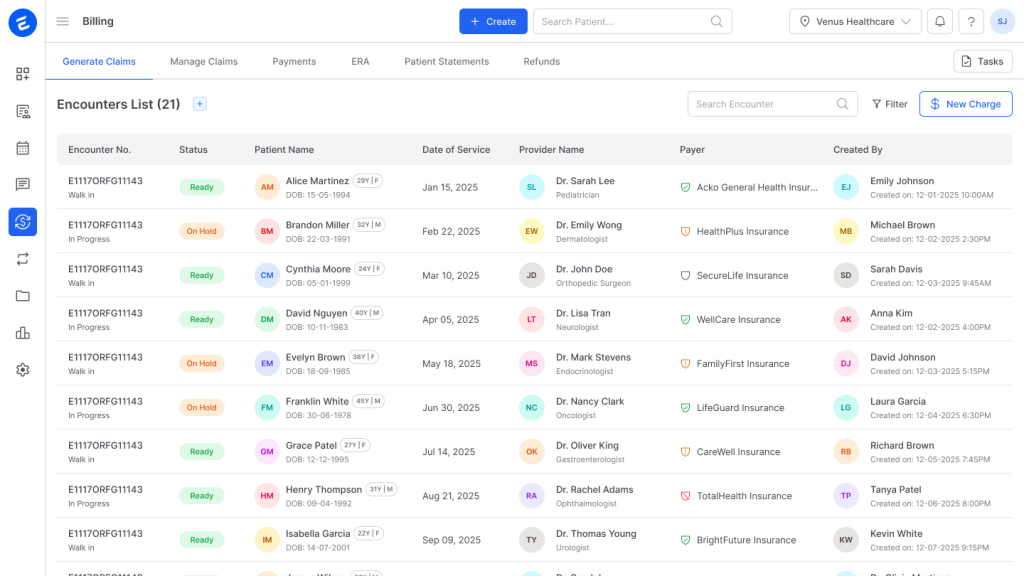
| Edvak | Independent & small group US practices | Native cardiology-specific | Yes, labs, imaging, fax parsing | Automated via task management | Yes, conversation capture + AI scribe | Yes |
| eClinicalWorks | Mid to large practices | Specialty forms for arrhythmia, HF, HTN | Yes, device and diagnostic integration | Yes — population health tools | Yes, EVA voice assistant | Yes |
| DrChrono | Mobile-first and iPad-based workflows | Customisable cardiology templates | Yes, lab and imaging integration | Via add-on modules | Speech-to-text, photo/drawing tools | Yes |
| NextGen | Multi-specialty groups | Specialty-configured workflows | Yes | Yes | Limited native AI | Yes |
| AthenaHealth | Multi-specialty ambulatory groups | Requires customisation | Yes | Yes, strong RCM integration | Limited | Yes |
| PrognoCIS | Small to mid practices | Extensive pre-built cardiology library | Yes, EKG, echo, Holter direct | Yes | Limited | Yes |
| OmniMD | Practices prioritising AI billing | Moderate cardiology templates | Yes | Yes | AI scribe + AI medical coder | Yes |
Top 7 Best Cardiology EHR Systems in 2026
1. Edvak: Best Overall EHR for Independent and Small Group US Cardiology Practices
Edvak is the best EHR for cardiology for independent and small group US practices in 2026. It is the only AI-native platform where every cardiology-relevant clinical and administrative workflow runs inside one connected system without third-party integrations. In most EHR implementations, AI documentation, fax management, billing code generation, and referral tracking are separate modules from separate vendors stitched together. In Edvak, every module shares the same patient record and communicates automatically.
Who Edvak is best for: Solo cardiologists, 1 to 10 provider practices, multi-location cardiovascular groups, and practices in Texas and California navigating state-specific compliance requirements on top of federal HIPAA and MIPS standards.
AI Documentation Built for Cardiovascular Complexity
Conversation Capture to Structured Notes listens to the cardiology consultation in real time and drafts a structured clinical note automatically. This is not a generic SOAP note. It is a cardiology-structured note with cardiovascular history, examination findings, EKG interpretation fields, and assessment documentation populated from the live conversation. The cardiologist reviews and approves a complete note in 2 to 4 minutes at the end of the encounter rather than writing from memory after a 10-hour day.
Integrated Speech-to-Text extends this to full voice navigation during procedures and examinations. Clinical Decision Support surfaces cardiac risk alerts, drug interaction warnings for cardiac polypharmacy, and MIPS quality measure prompts in real time during the encounter at the exact moment they are clinically relevant.
Digital Intake That Populates Cardiac History Before the Visit
Patient Intake with Auto Charting sends cardiology-specific digital forms automatically when an appointment is booked. The form captures prior cardiac events, previous procedures including catheterisation and stenting, current cardiac medications, symptom characteristics, and family history of coronary artery disease and sudden cardiac death. When the patient submits the form before arriving, Edvak auto-charts the data directly into the record. The cardiologist walks in with full cardiac context already in the chart.
Referral Management That Closes the Loop
Outgoing referrals to interventional cardiologists, electrophysiologists, and cardiac surgeons are initiated electronically with clinical documentation attached. The receiving specialist receives a complete structured referral rather than a faxed cover sheet with incomplete information. Incoming referrals from primary care are parsed by AI, with patient demographics, reason for referral, medications, and relevant history extracted and populated into the chart automatically. Real-time status tracking shows when referrals are accepted, when patients are scheduled, and when results are received, entirely inside Edvak without fax follow-up calls.
Fax and Document Processing Without Manual Handling
Fax Management reads every incoming fax using AI. Hospital discharge summaries following cardiac events, imaging reports from outside facilities, prior authorisation approvals, and lab results from reference laboratories are all categorised, matched to the correct patient, and routed to the right physician automatically. Autofill Document Parser extracts structured clinical data from incoming documents and populates the chart. Incoming discharge summaries have diagnoses, procedures, discharge medications, and follow-up instructions extracted without any manual data entry.
Cardiology Billing Automation
Auto Capture of ICD and CPT Codes reads the approved clinical note and assigns billing codes automatically. This includes cardiology procedure codes for echocardiography, stress testing, and device management, E&M codes based on documented decision-making complexity; and modifier logic applied based on clinical context documented in the note. Missing charges are flagged before claim submission. Denial prediction identifies high-risk claims before they reach the clearinghouse.
Scheduling Built for Cardiology Complexity
Stress tests with pre-authorisation requirements, device checks requiring the EP lab, urgent chest pain evaluations, and multi-provider procedures all have distinct appointment types with appropriate workflows attached. Automated Care Reminders send procedure-specific preparation instructions automatically. A patient scheduled for a nuclear stress test receives caffeine restriction guidance and medication hold instructions, not a generic appointment confirmation.
Compliance and Certifications
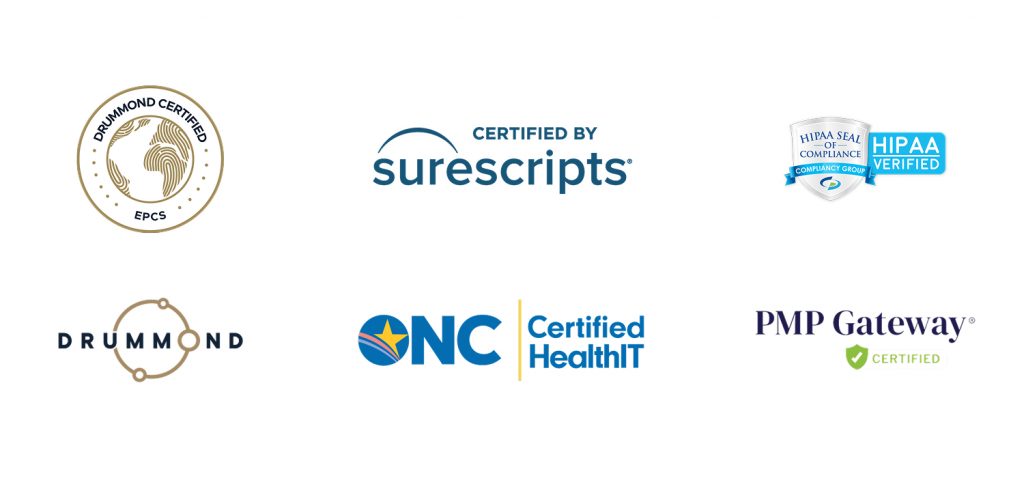
Edvak is ONC certified under the 21st Century Cures Act, Drummond certified through independent third-party verification, and Surescripts certified for EPCS across all US states including California’s multi-factor authentication requirements. HIPAA-aligned workflows cover every module with AES-256 encryption at rest and SSL in transit. A Business Associate Agreement is signed covering AI documentation, fax processing, and patient communication tools.
Pricing: Pricing starts as low as $299 per month. Contact Edvak for practice-specific pricing based on provider count and module selection.
Edvak has completely transformed how I manage my cardiology practice. The AI-powered documentation captures complex cardiac consultations accurately without interrupting my workflow, allowing me to stay fully focused on my patients. Reviewing imaging, managing medications, and handling follow-ups now feel seamless and efficient. It has significantly reduced my after-hours documentation and improved both the clarity of my notes and the quality of patient care.
Dr. Anderson, Cardiologist, Austin, TX
2. eClinicalWorks: Best for Mid to Large Cardiology Practices Needing Enterprise Depth
eClinicalWorks is one of the most widely deployed EHR systems in US specialty care and its cardiology capabilities are genuinely deep. Specialty-specific documentation templates cover arrhythmias, heart failure, hypertension, and coronary artery disease with pre-built order sets and structured fields. Integration with cardiopulmonary diagnostic devices enables direct data input from diagnostic equipment into the chart.
The EVA voice assistant allows cardiologists to navigate charts, retrieve patient data, and document by voice during the encounter. The eClinicalWorks Scribe tool converts natural speech into structured progress notes. PRISMA, its health information search engine, retrieves patient records from providers across the country regardless of which EHR system they use, a meaningful capability for practices receiving referrals from diverse health systems.
Population health tools allow identification of care gaps across the patient panel including heart failure patients overdue for follow-up, post-MI patients due for medication reconciliation, and patients with uncontrolled hypertension. MIPS quality measure tracking is integrated at the practice management level.
Who eClinicalWorks is best for: Group practices with 10 or more providers, practices that need population health management alongside clinical EHR, and cardiology groups where enterprise platform depth justifies higher implementation complexity.
Honest Limitation: eClinicalWorks is an enterprise platform with enterprise implementation complexity. For independent practices or small groups, the configuration overhead and IT requirements are typically more than the practice can manage efficiently without dedicated IT staff.
Pricing: EHR only from $449 per provider per month. Higher tiers for practice management and billing.
3. DrChrono: Best for Mobile-First Cardiology Workflows
DrChrono built its EHR architecture around mobile-first use from the beginning. For cardiologists moving between hospital settings, office environments, and remote consultations in a single day, full chart access, order entry, prescription management, and documentation are functional on iPad and iPhone without a stripped-down version of the desktop experience.
Cardiology-specific templates for conditions including coronary artery disease, congestive heart failure, and atrial fibrillation can be customised to match individual practice documentation workflows. Text expanders, medical speech-to-text, and photo and drawing capabilities support documentation at the point of care. The patient portal supports secure messaging, appointment scheduling, and the ability for patients to upload health data from wearable devices, which is relevant for remote cardiac monitoring workflows.
Who DrChrono is best for: Cardiologists who work across multiple locations and need full EHR functionality on mobile devices, and practices that want a flexible customisable platform without enterprise-level complexity.
Honest Limitation: MIPS tracking requires add-on modules rather than being built natively into the core platform. Cardiology-specific billing code automation requires more manual validation compared to platforms with native AI code capture.
Pricing: Custom pricing.
4. NextGen: Best for Multi-Specialty Groups With Cardiology as One of Several Specialties
NextGen’s strength is specialty-configured workflows across multiple disciplines. Pre-configured cardiology templates integrate with the broader multi-specialty platform, so referrals between specialties within the same group stay inside one system. The scalable platform architecture supports practice growth without requiring platform migration. Telehealth capabilities are fully integrated and MIPS quality measure reporting is supported at the enterprise level.
Who NextGen is best for: Multi-specialty ambulatory groups where cardiology operates alongside internal medicine, pulmonology, or other specialties, and where a single EHR platform covering all specialties is operationally important.
Honest Limitation: For a cardiology-only practice, NextGen’s multi-specialty architecture introduces complexity that is not needed. Cardiology-specific AI documentation tools are less developed than eClinicalWorks or Edvak. Implementation timelines tend to be longer than platforms designed for independent specialty practices.
Pricing: Custom pricing.
5. AthenaHealth: Best for Cardiology Practices Prioritising Revenue Cycle Management
AthenaHealth’s revenue cycle management capabilities are among the strongest in the market. Real-time eligibility verification, automated claim scrubbing, denial management workflows, and integrated reporting give cardiology practices strong financial visibility and clean claims performance. Interoperability is a genuine strength as AthenaHealth’s network enables data sharing across health systems and payers more broadly than most competitors.
Who AthenaHealth is best for: Cardiology practices where clean claims performance and revenue cycle efficiency are the primary selection criteria, and practices with dedicated IT resources willing to customise documentation templates for cardiovascular workflows.
Honest Limitation: Cardiology-specific documentation templates are not native and require configuration work that adds cost and implementation time. AI documentation tools are less developed than Edvak or eClinicalWorks. Better suited to larger practices with dedicated IT resources for ongoing configuration.
Pricing: Percentage-based pricing on collections rather than a flat monthly fee.
6. PrognoCIS: Best for Practices Wanting a Deep Pre-Built Cardiology Template Library
PrognoCIS has invested specifically in cardiology template development. A customisable cardiology library covers studies, evaluations, and procedures with pre-built structured content. Direct integrations with diagnostic equipment go beyond labs and radiology. EKG machines, echocardiograms, and Holter monitors can interface directly with results viewable in the chart without manual document management.
Referral management, pre-authorisation tracking, and real-time eligibility are integrated into the practice management layer. PrognoCIS has documented real-world cardiology deployment including a named interventional cardiologist testimonial on their cardiology page.
Who PrognoCIS is best for: Small to mid-size cardiology practices that want extensive pre-built cardiology documentation templates without building from scratch, and practices that need direct diagnostic equipment integration as a primary requirement.
Honest Limitation: AI documentation tools are more limited than Edvak or eClinicalWorks. PrognoCIS does not offer ambient AI conversation capture at the same level. The platform is stronger on template depth than on AI-driven workflow automation.
Pricing: Custom Pricing.
7. OmniMD: Best for Practices Making AI-Powered Billing Their Primary Priority
OmniMD has built a strong AI layer specifically around medical coding and revenue cycle management. The AI Medical Coder converts clinical documentation into structured compliant codes in real time. Denial prediction identifies which claims are likely to be refused based on historical payer behaviour before submission. Underpayment recovery compares every remittance against contracted rates and flags gaps. The AI Medical Billing module tracks claims against each payer’s filing window and escalates ageing claims by recovery likelihood rather than date order.
The AI Medical Scribe transcribes patient interactions into charts with speaker diarisation, multilingual support, and FHIR-based EHR integration. The AI Clinician tool provides real-time clinical suggestions during documentation including medication recommendations cross-checked against contraindications and allergies.
Who OmniMD is best for: Cardiology practices where revenue cycle performance, specifically denial prediction, underpayment detection, and automated coding, is the leading selection criterion.
Honest Limitation: OmniMD’s cardiology-specific template library is more moderate than PrognoCIS or eClinicalWorks. The platform is stronger on the AI billing and coding layer than on cardiology-specific clinical workflows such as device management documentation or MIPS quality measure automation.
Pricing: Custom Pricing.

How to Choose the Best Cardiology EHR: Top Selection Criteria
The right cardiology EHR is the one that matches your practice structure, clinical workflows, and compliance environment, not the one with the most features.
Solo or 2 to 3 cardiologist practice: Prioritise AI documentation and billing automation over configurability. You do not have IT staff to manage complex implementations. You need a system that handles cardiology out of the box with minimal configuration overhead. Edvak and PrognoCIS are the strongest options at this scale.
4 to 15 provider cardiology group: You have more volume to justify a more robust platform but still benefit from specialty focus rather than multi-specialty generalism. Edvak, eClinicalWorks, and OmniMD all serve this segment well. Edvak is strongest on AI-native cardiology workflow. eClinicalWorks is strongest on enterprise depth.
Multi-location cardiovascular group: Centralised analytics across locations, consistent compliance architecture, and multi-site scheduling are the deciding factors. Edvak and eClinicalWorks both support multi-location operations natively with centralised reporting.
Hospital-affiliated practice: Check whether your health system has mandated a specific platform before evaluating anything else. If Epic or Oracle Health is required, that decision is already made. If you have independent choice, evaluate interoperability with the hospital system as a primary criterion.
Interventional cardiology or electrophysiology focus: Device data management and cath lab result integration are non-negotiable. Confirm specific integration capabilities with each vendor before evaluating any other features.
MIPS compliance is urgent: Look for automated MIPS tracking built into task management and analytics, not a separate module or manual reporting workflow. Edvak tracks MIPS quality measures automatically through integrated Task Management. eClinicalWorks supports MIPS through population health tools.
Texas practices: TMB Electronics documentation requirements and MIPS reporting apply simultaneously. See the Texas cardiology practice management software guide for a complete breakdown of state-specific compliance requirements.
California practices: CCPA, California Medical Board documentation standards, and EPCS multi-factor authentication apply on top of federal HIPAA compliance. See the best EHR for cardiologists in California for a state-specific breakdown.
12-Point Cardiology EHR Checklist Before You Sign
Before signing any cardiology EHR contract, confirm all of the following.
AI captures cardiology-specific clinical notes during the visit through ambient or voice documentation, not dictation after the visit.
Cardiology billing codes including echocardiography, stress testing, and device management CPT codes are generated automatically from approved clinical notes, not entered manually.
Patient intake captures comprehensive cardiac history including prior cardiac events, procedures, medications, symptoms, and family history, and populates the chart automatically before the provider enters the room.
Referral initiation, tracking, and result receipt all happen inside the same system with real-time status visibility.
Incoming hospital discharge summaries, outside imaging reports, and prior authorisation documents are processed and filed without manual data entry.
Insurance eligibility and prior authorisation status are verified before every procedure appointment, not discovered after a claim denial.
Drug-drug interactions for cardiac polypharmacy including anticoagulants, antiplatelets, antiarrhythmics, and heart failure medications are checked comprehensively at the point of prescribing.
Appointment reminders include procedure-specific preparation instructions automatically, including caffeine restriction for stress tests and medication hold guidance for applicable procedures.
MIPS quality measure performance is tracked automatically without manual data compilation.
The platform holds ONC certification, Drummond certification, and Surescripts certification confirmed by independent third parties.
EPCS compliance meets your state’s specific requirements including California multi-factor authentication if applicable.
A Business Associate Agreement is signed covering every module including AI documentation, fax management, referral management, insurance eligilibity checks and patient portals.
Certifications That Matter for US Cardiology Practices
ONC Certification (21st Century Cures Act) confirms the EHR meets federal interoperability and information-blocking requirements. It is required for MIPS participation under the Promoting Interoperability performance category. An EHR that is not ONC-certified cannot be used for MIPS reporting.
Drummond Certification is independent third-party verification of ONC certification requirements. It carries more weight than self-reported compliance because it involves an external audit process rather than vendor self-declaration.
Surescripts Certification is required for electronic prescribing within the Surescripts network including EPCS. All 50 states now have EPCS requirements. California’s multi-factor authentication standard is the most stringent in the country.
HIPAA Compliance is claimed by every EHR vendor. The questions that matter beyond the claim are: AES-256 encryption at rest, SSL in transit, role-based access controls, immutable audit trails, and whether the vendor signs a Business Associate Agreement that explicitly covers AI documentation and fax processing modules, not just the core EHR.
Edvak holds all four certifications: ONC certified, Drummond certified, Surescripts certified, and HIPAA-aligned with BAA coverage across every module.
Frequently asked Questions for Cardiology EHR
-
What is the best EHR for a cardiology practice?
For solo and small group cardiology practices, the best EHR is one that removes documentation burden, automates billing, and works out of the box without IT overhead.
Edvak stands out because it is built specifically for independent specialty practices. It delivers AI-powered documentation, automatic code capture, and cardiology-native scheduling from day one, without requiring customisation or long setup cycles.
While platforms like PrognoCIS offer strong template libraries, they still rely heavily on manual workflows. In contrast, Edvak reduces clicks, automates repetitive tasks, and allows cardiologists to focus on patient care instead of system management.
-
Which cardiology EHR integrates with ECG and Holter monitors?
Several systems such as eClinicalWorks, PrognoCIS, and OmniMD support direct device integrations.
But, Edvak takes a more flexible and practical approach. It combines Electronic Labs and Imaging integration with AI-powered document parsing that converts incoming ECG, echo, and Holter reports into structured chart data automatically.
This means practices are not dependent on complex device-specific integrations and can still achieve structured, usable data without manual entry, which significantly reduces staff workload.
-
What EHR do most cardiologists use?
Large hospital systems often use Epic or Oracle Health, while some outpatient practices rely on eClinicalWorks or AthenaHealth.
Many independent cardiology practices are now shifting toward AI-native EHRs like Edvak. The reason is simple: traditional EHRs were not built for modern cardiology workflows and require constant workarounds.
Edvak is increasingly chosen because it is designed specifically for cardiovascular care, with built-in AI documentation and workflow automation that older systems simply cannot match.
-
Does cardiology EHR software support MIPS reporting?
Most EHRs support MIPS reporting, but the experience varies significantly.
In many systems, reporting requires manual data extraction or separate workflows, which adds administrative burden.
Edvak eliminates this friction by automatically tracking key cardiology MIPS measures such as beta blocker therapy post-MI, statin therapy for ASCVD, and blood pressure control through integrated task management and analytics.
This automation ensures compliance without additional effort, which is a major advantage over traditional systems.
-
What is the difference between a general EHR and a cardiology-specific EHR?
General EHRs are designed for primary care workflows and often fail to handle the complexity of cardiology.
A cardiology-specific AI EHR like Edvak is built around real-world cardiovascular workflows, including structured cardiac history, imaging integration, risk stratification, and complex medication management.
The difference becomes clear in daily use. With general systems, providers spend time adapting the software. With Edvak, the system adapts to cardiology workflows, resulting in faster documentation, better coding accuracy, and less staff friction.
-
How much does cardiology EHR software cost?
Pricing varies widely, but hidden costs often come from implementation, training, and add-on modules.
Edvak offers transparent pricing starting as low as $299 per provider per month, with built-in AI features and minimal setup requirements.
In contrast, other EHRs like Athena Health, eClinical Works, Dr Chrono use custom pricing or percentage-based models, which can increase costs over time and reduce predictability.
-
Which EHR is best for interventional cardiology?
Interventional cardiology requires advanced capabilities such as cath lab integration, prior authorisation workflows, and complex procedure coding.
While some enterprise systems support these workflows, they are often expensive and difficult to implement for smaller practices.
For independent interventional cardiology practices, the key advantage of Edvak is its ability to automate documentation and coding from procedure notes, reducing administrative overhead while maintaining accuracy.
-
Can cardiology EHR software integrate with cardiac imaging systems?
Yes, but not all integrations are equal.
Many EHRs rely on fax-based workflows that require manual data entry.
Edvak improves this process by combining imaging integrations with AI-driven parsing that converts reports into structured, actionable data inside the chart.
This reduces manual work and ensures faster clinical decision-making.
-
What EHR features reduce cardiology claim denials?
The most effective systems combine documentation accuracy, coding automation, and pre-submission validation.
Edvak brings all of these together with AI-powered documentation, automatic CPT and ICD-10 coding, real-time eligibility checks, claim scrubbing, and denial prediction.
Unlike traditional systems where these features are fragmented or manual, Edvak integrates them into a single workflow, significantly reducing denial risk and improving revenue cycle performance.
-
What are the top cardiology EHR systems in 2026?
The top cardiology EHR systems in 2026 include Edvak (best for independent, small and med sized practices), eClinicalWorks (best for multi-specialty), athenahealth (best for RCM), DrChrono (best for mobile), NextGen (best for enterprise), PrognoCIS (best for templates), and OmniMD (best for AI billing).
What Makes an EHR the Best for Cardiology
The best EHR for cardiology in 2026 is not a single answer for every practice. It is the system that matches your practice structure, clinical workflows, compliance environment, and growth trajectory.
For independent and small group US cardiology practices, Edvak is the strongest overall option in 2026. It is the only AI-native platform where cardiology-specific documentation, billing automation, referral management, fax processing, MIPS tracking, and patient engagement all run inside one connected system without third-party integrations. Every module shares the same patient record. There is no gap between the clinical documentation layer and the billing layer because there is no separation to manage.
Whatever platform you select, verify the following before signing: ONC certification for MIPS eligibility, Surescripts certification for EPCS compliance across your state, cardiology-specific documentation templates built for cardiovascular encounters rather than primary care templates with cardiology fields added, and direct diagnostic equipment integration if ECG and imaging data management is part of your daily clinical workflow.
Book a 30-minute cardiology-specific Edvak demo
Related reading: Best EHR for cardiologists in California Texas cardiology practice management software EHR for cardiology: complete workflow guide
Ready to take the next step?
Get a personalized demo and see how Edvak can drive real impact to your practice.
Related Blogs




More Categories
Edvak.com Terms & Conditions Privacy Policy © 2026 Edvak. All rights reserved.