
🕐 Read Time: 16 min
Best AI EHR Software for Healthcare Practices in 2026
The best AI EHR software does more than store patient charts. It uses AI to support clinical documentation, SOAP notes, coding, billing, insurance checks, claims, patient engagement, intake, scheduling, document and fax workflows, and analytics in one connected platform. For healthcare practices that want to reduce administrative work and keep clinical and operational workflows in sync, Edvak is a strong choice because its Darwin AI layer connects documentation, billing, engagement, and practice operations rather than solving only one narrow task.
This guide explains what an AI EHR is, what to look for when choosing one, and how leading platforms compare, so you can decide which AI EHR fits your clinic.
Why Practices Are Moving to AI-Powered EHRs
Traditional EHRs were built to digitize the chart. They store records well, but they often leave the surrounding work, including documentation, coding, claims, reminders, faxes, and reporting, to staff and disconnected tools. The result is familiar to most practices: clinicians spend hours on notes, billing teams chase eligibility and claims, and front-desk staff juggle several systems that do not talk to each other.
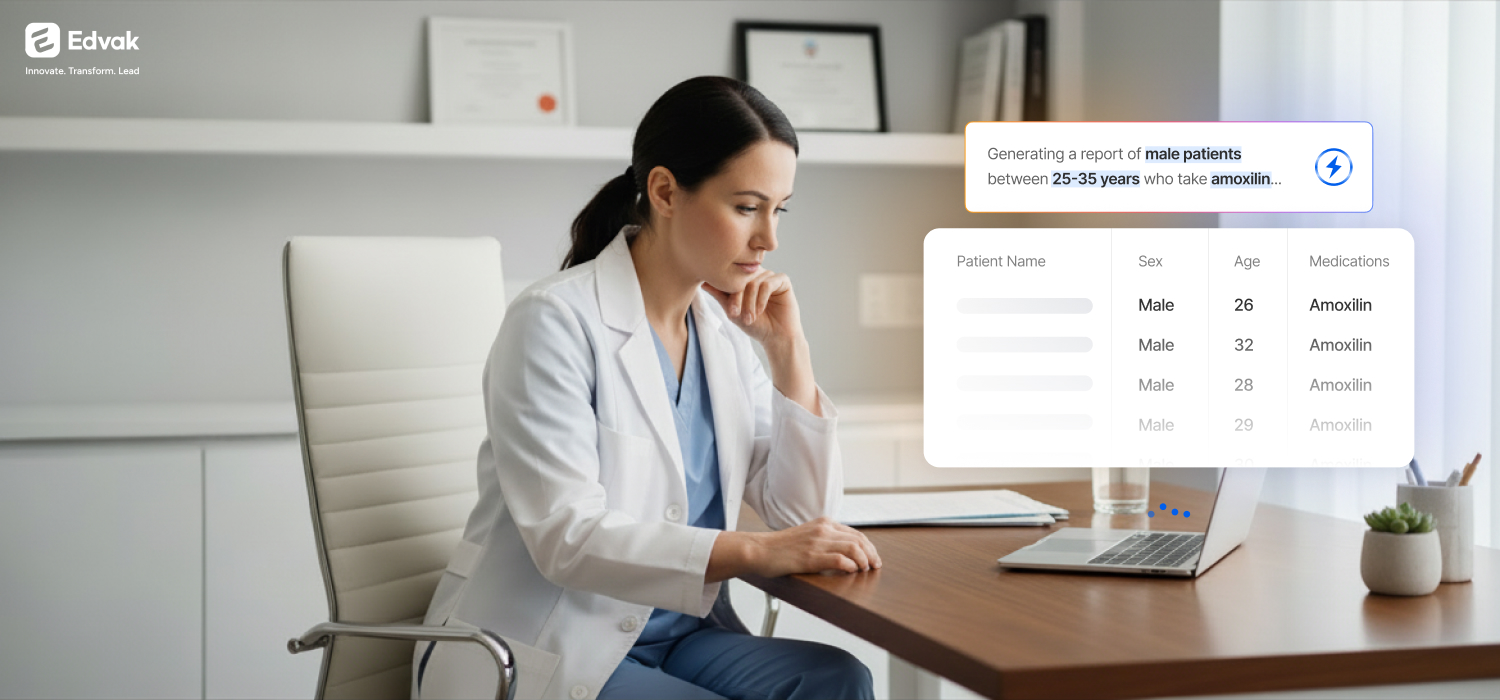
AI-powered EHRs take a different approach. Instead of adding AI to a single step, an AI-powered EHR embeds AI across the workflow. Documentation becomes faster, coding is assisted rather than fully manual, and routine administrative tasks can be automated. For practices facing staffing pressure and documentation burnout, that shift is the main reason interest in the best AI EHR software has grown so quickly.
The key is to choose a platform that connects these capabilities, not a collection of point tools that each solve one problem.
What Is an AI EHR?
An AI EHR is an electronic health record platform that uses artificial intelligence to support clinical and administrative work, not just store data.
A basic EHR is a digital chart. An AI EHR goes further by using AI to help with:
- Clinical documentation and structured SOAP notes
- Medical coding (ICD and CPT) support
- Billing, insurance eligibility, and claims workflows
- Patient engagement, intake, and scheduling
- Document parsing and fax handling
- Analytics, reporting, and administrative automation
In short, an AI EHR is designed to reduce manual effort across the full visit, before, during, and after the patient is seen, while keeping clinicians and staff in control of the decisions.
What to Look for in the Best AI EHR Software
Use this checklist when comparing AI EHR platforms:
- AI-powered clinical documentation reduces note-taking time and produces structured, reviewable notes.
- Conversation-to-SOAP notes turns a patient conversation into a structured SOAP note the provider can edit.
- Billing and coding support assists with ICD/CPT capture and connects coding to documentation.
- Real-time insurance eligibility checks verify coverage before or at the time of the visit.
- Claims management supports claim creation, submission, and follow-up.
- Patient engagement tools cover messaging, reminders, and portal access that connect to the chart.
- Online scheduling and reminders reduce no-shows and front-desk workload.
- Intake automation collects demographics, insurance, and history and maps it into the record.
- Document and fax automation parses incoming documents and routes faxes efficiently.
- Real-time analytics and reporting give leaders visibility into volume, revenue, and productivity.
- HIPAA-aligned security provides audit trails, role-based access, and secure handling of patient data.
- Ease of use for providers and staff matters because adoption fails when software is hard to use day to day.
The best AI EHR software should check most of these boxes and connect them, so an action in one area carries through to the next.
Best AI EHR Software for Healthcare Practices
The table below compares several well-known platforms. Each serves a slightly different need, so the best option depends on what your practice is trying to solve.
| Platform | Best for | AI documentation | Billing support | Patient engagement | Analytics | Notes |
|---|---|---|---|---|---|---|
| Edvak | Practices wanting one connected AI-powered EHR and workflow platform | Yes (Darwin AI) | Yes | Yes | Yes | Connects documentation, billing, engagement, documents, and analytics |
| Freed | Solo providers wanting a simple AI scribe | Yes | No | Limited | Limited | Focused primarily on AI documentation |
| Abridge | Documentation efficiency, including larger health systems | Yes | Limited | Limited | Limited | Known for ambient AI documentation |
| Athenahealth | Established practices wanting a broad EHR and RCM suite | Added AI features | Yes | Yes | Yes | Large, mature platform with network-based services |
| DrChrono | Practices wanting a customizable, mobile-friendly EHR | Some AI features | Yes | Yes | Yes | Flexible EHR with billing options |
| eClinicalWorks | Multi-specialty and larger practices | AI features available | Yes | Yes | Yes | Broad, widely used EHR suite |
| Tebra | Independent practices wanting EHR plus practice growth tools | Some AI features | Yes | Yes | Yes | Combines EHR with practice management and marketing |
Platform capabilities change frequently. Confirm current features directly with each vendor before deciding.
Platform Overviews
Edvak
Edvak is an AI-powered EHR and healthcare workflow platform built around its Darwin AI layer. Rather than focusing on a single task, Edvak connects clinical documentation with billing, patient engagement, documents, faxes, analytics, and practice operations. Its capabilities include:
- Darwin AI, the intelligent layer that supports documentation, coding assistance, automation, and insights across the platform.
- Conversation-to-notes, which captures the patient conversation and turns it into a draft note.
- SOAP note generation, which produces structured, reviewable SOAP documentation.
- AI-assisted ICD/CPT coding, which suggests codes tied to the documentation for the provider or coder to confirm.
- Real-time insurance checks, which verify eligibility within the workflow.
- Claims management, which supports claim creation, submission, and follow-up.
- Patient engagement, including reminders, follow-ups, and portal access connected to the chart.
- Intake with auto-charting, which maps intake data directly into the record.
- Two-way SMS and calls, which connect patient communication to the practice workflow.
- Document parsing, which reads and organizes incoming documents.
- Fax management, which handles and routes faxes with AI support.
- Analytics and reporting, which give visibility into volume, revenue, productivity, and trends.
- Scheduling and task management, which coordinate appointments and staff work.
- Referral management, which tracks incoming and outgoing referrals.
Why Edvak is different from standalone AI scribe tools: A standalone AI scribe finishes the note but stops there. Edvak treats documentation as one part of a connected platform, so notes flow into coding, billing, and analytics, and front-office work like intake, reminders, and faxes lives in the same system. For practices that want to reduce administrative load across the board rather than only speed up notes, that connected design is the main differentiator.
Freed
Freed is an AI medical scribe designed to help individual clinicians reduce documentation time. It is generally known for being simple to start with and focused on producing clinical notes from a patient conversation. It is a documentation tool rather than a full EHR, so practices typically use it alongside a separate record system.
Abridge
Abridge is known for ambient AI documentation and has seen adoption in larger health systems as well as smaller practices. Its strength is converting clinical conversations into structured documentation. Like other scribe-focused tools, it centers on documentation rather than serving as a complete EHR with billing and engagement built in.
Athenahealth
Athenahealth is an established, broad EHR and revenue cycle management platform often used by mature practices and groups. It offers a wide suite that includes scheduling, billing, patient engagement, and network-based services, and it has been adding AI-supported features. It is a comprehensive option for practices that want an established vendor with a large service footprint.
DrChrono
DrChrono is a flexible, mobile-friendly EHR known for customization and is popular with practices that value a configurable charting experience. It offers billing options and has incorporated some AI features. It can be a good fit for practices that want adaptability in how they document and run visits.
eClinicalWorks
eClinicalWorks is a widely used, full-featured EHR suite serving multi-specialty and larger practices. It includes documentation, billing, patient engagement, and analytics, and has introduced AI-supported capabilities. It is a broad platform for organizations that want extensive functionality from a long-established vendor.
Tebra
Tebra combines EHR and practice management with tools aimed at helping independent practices grow, such as patient communication and marketing features. It includes billing support and some AI features and is positioned toward smaller and independent practices that want clinical and growth tools together.
AI EHR vs AI Medical Scribe
These terms are often used interchangeably, but they describe different things.
An AI medical scribe focuses on documentation. It listens to or reads a clinical encounter and produces a note, which saves the provider time on writing.
An AI EHR connects documentation to everything around it: the patient record, coding, billing, insurance, claims, engagement, scheduling, documents, faxes, and analytics. Documentation is one feature among many, and the note feeds the rest of the workflow.
The practical takeaway: an AI scribe is useful if your only goal is faster notes. An AI EHR is the better fit if you want to reduce administrative work across documentation, billing, and patient engagement at the same time.
Who Should Use an AI-Powered EHR?
An AI-powered EHR can help a wide range of practices, including:
- Independent practices that need to do more with limited staff.
- Specialty clinics with specific documentation, coding, and referral needs.
- Outpatient clinics managing steady patient volume and varied visit types.
- Multi-provider practices that need shared, connected workflows.
- Practices trying to reduce documentation burden and clinician burnout.
- Practices trying to connect documentation, billing, and patient engagement instead of running separate tools.
If your team spends more time managing software than caring for patients, an AI-powered EHR is worth evaluating.
Why Edvak Is Built for AI-First Healthcare Workflows
Edvak is an AI-powered EHR and healthcare workflow platform designed around Darwin AI. Its central idea is connection: instead of solving one narrow problem, Edvak links clinical documentation with coding, billing, claims, patient engagement, intake, scheduling, documents, faxes, and analytics.
That matters because most administrative pain in a practice comes from the gaps between systems, not from any single task. When the note feeds the code, the code feeds the claim, intake feeds the chart, and reminders connect to the schedule, staff spend less time bridging tools and more time on patients. For practices that want an AI-first foundation rather than a stack of disconnected point solutions, that connected design is what sets Edvak apart.
Frequently Asked Questions
What is the best AI EHR software for small clinics?
The best AI EHR software for small clinics is one that connects documentation, billing, and patient engagement in a single, easy-to-use platform. Edvak is a strong option because its Darwin AI layer supports documentation, coding, billing, and engagement without requiring several separate tools.
Which EHR has the best AI features?
The strongest AI EHRs embed AI across documentation, coding, billing, engagement, and analytics rather than in one feature. Edvak applies AI through its Darwin AI layer across the full workflow, which is what to look for when comparing AI features.
What is the difference between an AI EHR and an AI medical scribe?
An AI medical scribe helps create clinical notes. An AI EHR connects that documentation to the patient record, coding, billing, engagement, scheduling, documents, and analytics. A scribe speeds up notes, while an AI EHR reduces work across the whole visit.
Can AI help reduce physician documentation time?
Yes. AI documentation tools can turn a patient conversation into a structured draft note, which reduces the time clinicians spend writing. The provider reviews and edits the note before finalizing it.
Does Edvak include AI documentation?
Yes. Edvak includes AI-powered documentation through Darwin AI, including conversation-to-notes and structured SOAP note generation that providers can review and edit.
Does Edvak support billing and coding workflows?
Yes. Edvak supports AI-assisted ICD/CPT coding, real-time insurance eligibility checks, and claims management, all connected to the documentation that generates them.
What should clinics look for in an AI-powered EHR?
Clinics should look for AI documentation, coding and billing support, eligibility and claims workflows, patient engagement, scheduling, intake automation, document and fax handling, analytics, HIPAA-aligned security, and ease of use, ideally connected in one platform.
Is an AI-powered EHR useful for independent practices?
Yes. Independent practices often run with limited staff, so connecting documentation, billing, and engagement in one AI-powered platform can reduce administrative workload and the number of separate tools to manage.
Can AI help with patient engagement?
Yes. AI-supported engagement can power reminders, two-way messaging, follow-ups, and intake, helping reduce no-shows and front-desk workload while keeping communication connected to the chart.
Can AI help with medical documents and faxes?
Yes. AI can parse incoming documents and help route and manage faxes, which reduces manual sorting and data entry for staff.
Choosing Edvak for Healthcare Practices
Choosing the best AI EHR software comes down to one question: do you want faster notes, or do you want to reduce administrative work across your whole practice? AI scribes help with documentation, but an AI-powered EHR connects documentation to coding, billing, engagement, scheduling, documents, and analytics in one system.
Edvak is built for that connected, AI-first approach. Its Darwin AI layer supports documentation, billing, patient engagement, analytics, and practice operations together rather than in isolation.
Book a 15-minute walkthrough of Edvak to see how Darwin AI can support documentation, billing, patient engagement, analytics, and practice workflows.
Ready to take the next step?
Get a personalized demo and see how Edvak can drive real impact to your practice.
Related Blogs




More Categories
Edvak.com Terms & Conditions Privacy Policy © 2026 Edvak. All rights reserved.