
🕐 Read Time: 16 min
Pajama Time: Why You Are Still Charting at 9 PM and How AI Documentation Gets Your Evenings Back
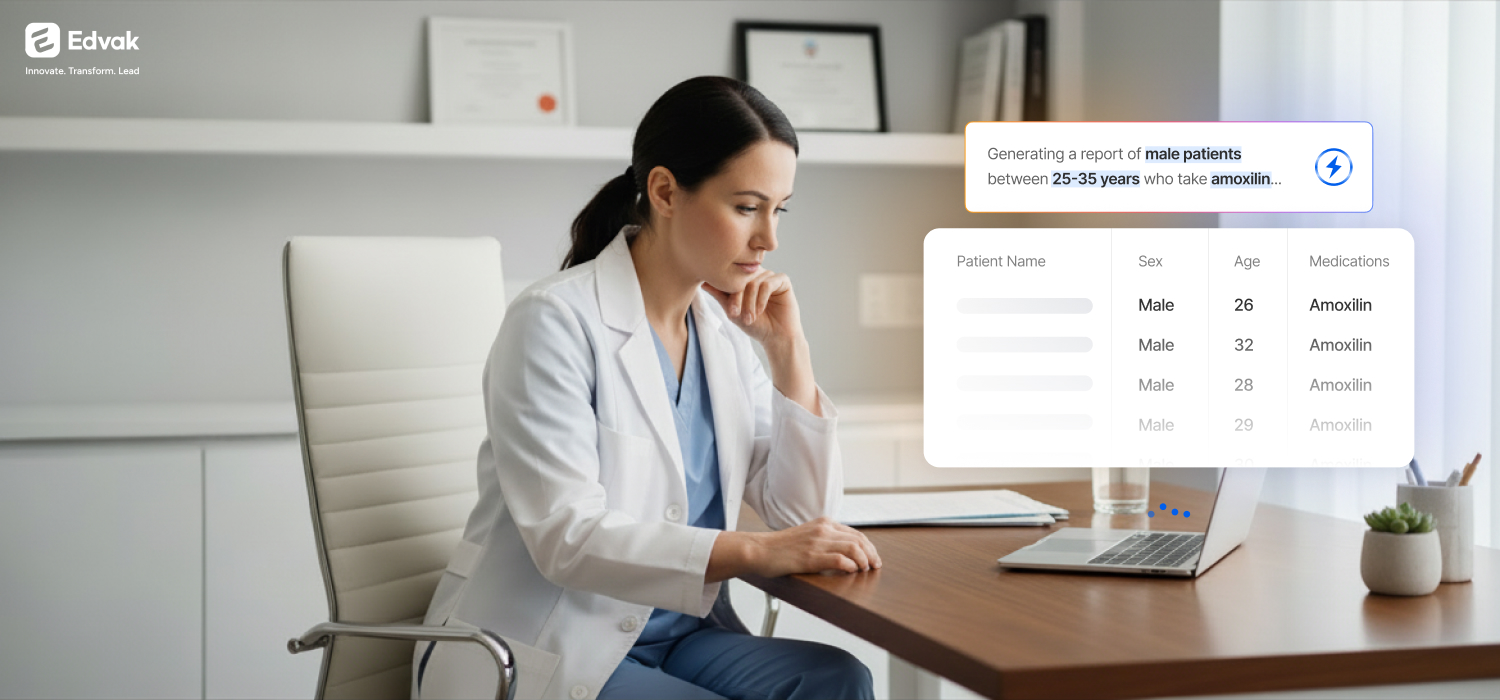
It is 9:15 PM. Dinner is cold. The kids are asleep. The laptop is still open, and you are three notes deep into yesterday’s encounters. The cursor blinks on a chief complaint you can barely remember. You promise yourself this will not happen tomorrow. But it probably will. This is pajama time, and if you are reading this, you are living it.
You are not alone, and you are not slow, disorganized, or bad at your job. You are working inside an electronic health record system that was never designed to give you your evenings back. The question is not how to chart faster. The question is what tools actually fix this. At Edvak, that is the exact problem we have built our platform to solve.
How big is the pajama time problem, really?
The numbers are worse than most clinicians realize.
- The American Medical Association reports that 20.9 percent of physicians spend more than 8 hours a week on the EHR outside normal working hours, and that figure has not improved since 2022.
- An athenahealth physician sentiment survey found average pajama time of 15 hours a week for fee for service practices, and 16 hours a week for clinicians working under both fee for service and value based payment models.
- A SoftwareFinder survey found that 85 percent of healthcare professionals participate in pajama time, averaging 8.2 hours every week, which adds up to roughly 53 full workdays a year.
- Among medical residents, those who spend three or more hours per night on pajama time are significantly more likely to experience burnout, and they perform worse on training examinations.
The cost is not just time. It is missed dinners, strained relationships, and the quiet erosion of why you chose medicine in the first place. Burnout researchers have linked documentation burden directly to clinician attrition. The EHR was supposed to make this easier. For most practices, it did not.
Why does your current EHR force you to chart at home?
Most legacy EHR systems were built as billing engines first and clinical tools second. That architecture creates four predictable bottlenecks behind every late night of charting.
- Click fatigue. A single note can require 40 or more clicks across tabs, dropdowns, and forced fields, even for a routine visit.
- Templates that do not think. Generic templates force you to delete what does not apply rather than capture what actually happened.
- Memory tax. You are documenting at 8 PM what a patient said at 10 AM. Details slip. Notes get thinner. Coding suffers, and so does reimbursement.
- Coding and billing live in another tab. ICD and CPT capture happens after the note is done. That is a second pass on every encounter.
Cutting your after hours documentation is not about typing faster. It is about removing the after hours work from the workflow entirely.
What does AI documentation actually do, and what does it not do?
AI scribe has become a buzzword, and the gap between marketing and reality is wide. A documentation system that genuinely gets your evenings back has to do four things well, not just one.
1. Capture the conversation, not just dictation
Traditional speech to text turns your voice into typed words. That is useful, but it still requires you to narrate the note out loud. The real shift is ambient capture, where the system listens to the natural back and forth between you and the patient and writes the note for you. Edvak’s Conversation Capture to Structured Notes does exactly this. It converts spoken encounters into structured, specialty aware documentation in real time. For clinicians who prefer hands on dictation, Integrated Speech to Text remains available as a complementary input.
2. Produce a finished note, not a transcript
A wall of dialogue is not a note. You still have to organize it into HPI, ROS, exam, assessment, and plan. The right tool delivers a structured, edit ready note in your preferred format the moment the visit ends. This is the core promise of AI-Powered Documentation. Finished notes ready for your signature, not raw transcripts that you have to rebuild from scratch.
3. Code the visit while it is happening
Documentation and coding should not be two separate jobs. When the same AI that writes the note also surfaces the right diagnosis and procedure codes from the encounter, your billing workflow moves from end of day chore to already done. Edvak’s Auto Capture of ICD and CPT Codes pulls codes directly from the documented encounter, and Real-Time Insurance Eligibility Checks verify coverage before the patient leaves the room, not three days later when a claim gets denied.
4. Work across every kind of visit
In person, telehealth, follow up, new patient. Your AI scribe has to show up for all of them. Telehealth with AI Scribe extends ambient documentation into virtual visits, so a Tuesday telemedicine block does not undo Monday’s progress on the inbox.
Does the research support AI documentation?
Yes, with one important caveat. A 2026 JAMA study tracked 1,800 clinicians using AI scribes across five academic medical centers for more than two years, compared with 6,770 control clinicians at the same institutions. The headline findings:
- AI scribes were associated with daily reductions of 13 minutes in EHR usage and 16 minutes in documentation time on average.
- Clinicians who used AI scribes for more than 50 percent of visits saw twice the reduction in total EHR time and three times the reduction in documentation time.
- Primary care physicians, advanced practice providers, and clinicians using ambient documentation in at least half of their visits saw the biggest gains.
The caveat is in the second bullet. Only 32 percent of clinicians in the study used ambient documentation frequently enough to see the full benefit. The lesson is that the technology works, but only when the workflow around it is built to support frequent use. That is where an integrated platform such as Edvak matters far more than a standalone scribe app bolted onto a legacy EHR.
What does a workday without after hours charting actually look like?
Solving documentation in isolation is not enough. The notes you write are connected to schedules, intake forms, referrals, labs, and prescriptions. If the AI scribe is brilliant but the rest of the system fights you, you will still be charting at 9 PM, just on different things.
Here is what a full workflow looks like, end to end.
Before the visit: arrive prepared, not playing catch up
Patients fill out intake on their phones the night before through the Patient Portal and Online Scheduling. With Patient Intake with Auto Charting, that information lands directly in the chart with no front desk re typing and no forms to scan. Automated Care Reminders cut no shows, and 2-way SMS Chat and Phone Calls let patients ask quick questions without clogging your phone line.
During the visit: be present, not a stenographer
Ambient capture runs in the background. You make eye contact. The Electronic Health Record surfaces relevant history, Clinical Decision Support flags drug interactions and care gaps in the moment, and E-Prescribing and Medication Management sends the prescription before you walk out of the room. Labs and imaging orders flow through Electronic Labs and Imaging without re keying.
After the visit: sign and move on
The note is drafted. The codes are attached. Eligibility is verified. You review, edit if needed, and sign. Claims Management handles submission, and Payment Processing closes the loop. Faxes, referrals, and documents move themselves through Fax Management, Referral Management, Document Management, and the Autofill Document Parser, which reads incoming PDFs and drops the data into the right fields automatically.
At the end of the day: actually leave
Open tasks are tracked in Task Management, not in your head. Scheduling has tomorrow ready. Your inbox is not a graveyard of half finished notes, because they were finished hours ago.
How do you evaluate an EHR for finishing charts on time?
If you are shopping for a system specifically to escape pajama time, these are the questions worth asking on every demo.
- Does the note draft itself during the visit, or do you still have to dictate after?
- Are ICD and CPT codes captured from the encounter automatically, or do you code separately?
- Does it work for telehealth and in person visits with the same workflow?
- How specialty aware is the structured note? Does it understand your templates and language?
- Are intake, scheduling, and billing integrated, or are you patching tools together?
- Can the vendor show you, in real numbers, how much after hours documentation time drops in the first 90 days?
That last question matters most. Practices using Edvak’s Advanced EHR alongside integrated Practice Management, Patient Engagement, and Billing and Revenue Cycle Management report measurable shifts in when notes get closed, often within the same business day rather than after dinner. Analytics and Reporting make those changes visible at the provider and practice level, so you can see exactly where the time went.
It is not you, it is the system
AI documentation is not magic, and no software will perfectly write every note for every clinician on day one. But the difference between a system designed around your evenings and one designed around billing screens is the difference between signing your last note at 5:30 PM and signing it at 9:30 PM.
If you are spending three hours every night finishing charts, the tool is broken, not you. The technology to fix it exists today. The question is whether your current system was built to use it, or whether it is time to look at one that was. That is what Edvak is built for.
Get your evenings back
See how Edvak’s AI-Powered Documentation and Conversation Capture to Structured Notes close the loop on pajama time. Visit www.edvak.com to schedule a walkthrough and we will show you a real note generated from a real encounter, end to end.
Book a demo to know more.
Ready to take the next step?
Get a personalized demo and see how Edvak can drive real impact to your practice.
Related Blogs




More Categories
Edvak.com Terms & Conditions Privacy Policy © 2026 Edvak. All rights reserved.